Coolant, also known as antifreeze, is a vital fluid in your vehicle’s engine, playing a crucial role in temperature regulation. Composed of a mixture of water and antifreeze, typically ethylene glycol or propylene glycol, coolant also contains additives to prevent corrosion and lubricate the water pump. In this article, we'll review what coolant does, why it's important, and when you should get a coolant exchange.
What is coolant and what does it do?
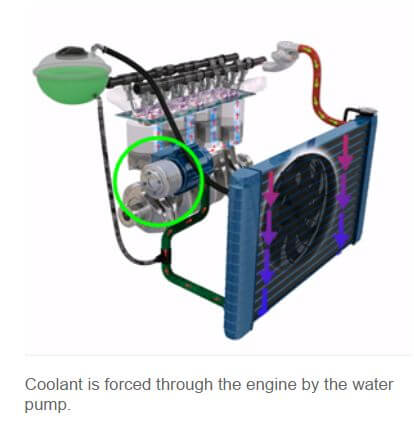
It circulates through the engine, absorbing excess heat and preventing overheating. The coolant fluid is circulated throughout the engine by a pump. As it moves, it absorbs the heat generated by the combustion process before returning to the radiator. Air passes over the radiator, the heat is transferred from the coolant to the air, lowering the temperature of the coolant so the whole cycle can start again.
Additionally, coolant protects the engine from freezing in cold weather, ensuring optimal performance year-round.
How does coolant "fail"?
Coolant with depleted corrosion inhibitors allows internal cooling system parts such as the inside of the radiator or hoses to be corroded, leading to potential leaks and the buildup of gels inside the system. This can result in overheating— and potentially cause serious damage to your engine.
Testing Your Coolant
There are four simple tests you can do to check your coolant. It is important that these tests are performed when the engine is cool.
Visual Test
The visual test is the easiest way to check the condition of your coolant. First you open up the radiator and check the back of the cap. You want your radiator cap to be clean. If there is sludge on the back of the cap it is an indicator that the coolant is bad. When looking inside of the radiator, if there is gunk and buildup this is another indicator that the coolant is bad.
Check out this
video below to learn more about the tests discussed above.
Vehicle's cooling system
Hydrometer
Your mechanic might use a hydrometer to check engine coolant by measuring its density, which indicates the coolant’s freezing and boiling points. To do this, they draw a sample of the coolant into the hydrometer, which contains a floating scale. The position of the float within the coolant sample reveals its specific gravity. This reading helps determine the concentration of antifreeze in the coolant, ensuring it provides adequate protection against freezing and boiling.
Multimeter Test
Your mechanic might also use a multimeter to check the engine coolant for electrical conductivity, which can indicate corrosion or contamination. First, they'll set the multimeter to measure voltage, then dip the positive probe into the coolant and touch the negative probe to the battery ground. A reading above 0.3 volts suggests that the coolant has become conductive, likely due to contaminants or deteriorating additives. This can lead to electrical issues and corrosion within the cooling system.
PH Test
Alternatively, your technician may use a pH test to check the engine coolant's acidity or alkalinity, which indicates its condition and potential for corrosion. Using a pH test strip, they dip it into the coolant and compare the resulting color change to a pH scale. Ideally, coolant should have a pH between 7.5 and 10. A pH outside this range indicates that the coolant is either too acidic or too alkaline, which can lead to corrosion and damage to engine components.
Get A Coolant Exchange at V&F Auto
Regularly checking and maintaining your engine’s coolant levels is essential for the longevity and efficiency of your vehicle. We recommend you get a coolant exchange to change your coolant
every 24 months or 30,000 miles. Learn more about the
services we provide here at V&F and the maintenance schedule we recommend that all of our customers follow.
At V&F Auto, our family-owned and operated service center provides top-quality auto repair services to Agawam, Feeding Hills, Southwick, West Springfield, and the surrounding Massachusetts communities. If your car needs maintenance or repair, call us at (413)314-2280 or schedule an appointment online.
 This article was originally published in 2017 and has been updated.