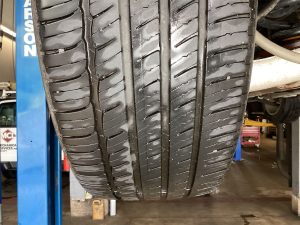
 Most people don’t think much about their tires until something goes wrong. A flat on the freeway. A strange shake at 65 mph. Worn tires can create some scary situations if not addressed properly. We sell tires and, as people who work with tires every day, we get it— it can be easy for tire maintenance to fall by the wayside. But if there’s one part of your vehicle that quietly handles more than its share of the workload, it’s your tires.
Where Rubber Meets the Road
When a customer comes in with poor handling, long braking distances, or even bad fuel economy, one of the first things we check is their tires. Tires handle everything between you and the road from absorbing every pothole, to keeping you stable in a hard corner, to gripping wet pavement during a downpour— and they do it all on just a few square inches of contact with the ground.
That’s why we keep a close eye on them. Because if your tires are in bad shape, your brakes, alignment, and suspension are all working uphill to compensate.
How Tires Tell You They're Done (Even Before a Blowout)
Tires don’t last forever. Most people know that, but many are surprised to find out just how many quiet signals your tires will give before they reach the replacement phase.
Here’s are a few things we look for:
- Tread wear that’s below 4/32
- Dry rot. Small cracks in the sidewalls signal the rubber’s aging
- Cupping or uneven wear, which often points to alignment or suspension issues
- Bulges or bubbles in the sidewall, usually caused by pothole damage
- Vibration or humming at a speed that doesn’t go away after a rotation
- Age. If your tires are over 6 years old, even with decent tread, the rubber may be too far gone
Most of these issues start small, long before a tire fails completely. That’s why we always recommend checking in during regular service visits. If there’s a problem, we’ll catch it early—and if not, at least you know you’re in the clear.
"But They Still Look Fine..." Extending the Life of the Tires You Already Paid For
One of the more common things we hear is: "They still look fine to me!" And visually, they might. But a tire’s condition isn’t just about how it looks. You can’t always see uneven wear from the driver's seat—or the beginning signs of internal belt separation.
That’s why we encourage periodic checks. Your tires are an investment, and nobody wants to deal with a blowout on the highway or sliding through a stop sign in the rain. Here are a few things you can di if you want to get every mile you can out of your current set:
- Keep them inflated properly. Check them monthly, and always before long trips.
- Rotate every 5,000–8,000 miles. This balances out the wear between front and rear.
- Get an alignment check yearly—or sooner if you notice any pulling, vibration, or uneven wear.
- Drive mindfully. Hard cornering, fast stops, and aggressive acceleration wear tires out faster than you think.
- Watch out for curb rash and potholes. One hard hit can compromise the sidewall or knock your alignment off.
A little attention goes a long way. Your tires will last longer, your ride will feel better, and you’ll be safer on the road.
If You Do Need New Tires, Here's What to Expect
We sell tires at V&F Auto, but we also take pride in how we guide you through the process. You won’t find any pressure tactics here—just real-world recommendations based on what your vehicle needs and how you drive it.
You don’t need the most expensive option, but you do need the right one. Some drivers need all-season reliability. Others benefit from performance tires or a dedicated winter set. We’ll walk you through the pros and cons in plain English and get you back on the road with confidence.
Don’t Wait for the Tow Truck: We Sell Tires!
Don’t wait until you’re on the side of the road to think about your tires. They’re your car’s first line of defense, and your peace of mind when the weather turns or the road gets rough.
At V&F, we offer a wide selection of tires— and we’ll tell you honestly if and when replacing your tires makes sense. If it’s been a while since your last tire check, stop by our shop at 443 Springfield Street in Agawam MA. Call us today at (413) 314-2280 or schedule an appointment online.
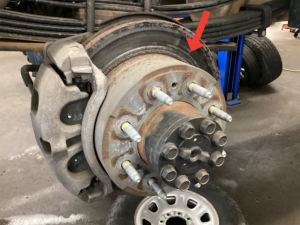
Modern disc
brakes are very effective, but even the most reliable brake rotor will deteriorate eventually. A broken or fractured rotor creates an immediate threat to your safety on the road, and must be replaced as soon as possible. Here are the signs and symptoms to watch for, and what causes them.
Signs and Symptoms
Most rotor damage takes the form of cracks, usually around the base of the disk where it joins the hub section. Radial cracking outward can also occur, but is more rare. Other occasional rotor problems include warping, heat-checking, and rotor bluing, which happens when a rotor has been subjected to high heat.
Even the slightest defect on the rotor will cause low-frequency vibrations, known as “judder,” during braking. If you notice this, you should see your mechanic right away. Serious rotor failures can cause a complete wheel lock-up and the driver will lose control of the vehicle.
Causes
Rotor cracks are usually the result of poor manufacturing choices. Low-quality rotors are usually poorly cast from non-homogeneous cast iron, creating weak spots that cannot withstand the forces generated during braking in the long term. When possible, you should always research these kinds of manufacturing defects before you buy a car.
Rotor damage can also be caused by improper brake care. Continuing to drive once brakes go metal to metal can cause excessive stress and wear, eventually causing them to break, crack, warp, heat-check, or “rotor blue” as your braking system is subject to extremely high temperatures. If you wait until the pad is worn to the anti-squeal shim and is damaging the rotors, you’re going to be looking at a very expensive fix. Repairs can cost anywhere from a few hundred to a few thousand dollars, depending on your vehicle and the parts that were damaged.
A rotor that is still in service long after it has worn out, a typical case with older vehicles, will also be susceptible to cracking.
Fix Your Broken Rotor At V&F
Our expert mechanics use the latest diagnostic equipment and high-quality CARQUEST auto parts to get your brakes back in shape. Plus, our auto repair services are backed by an industry-leading 3-year / 36,000-mile warranty on parts and labor. Call us today at (413) 314-2280 or
schedule an appointment online.